
Ghana Standardises Three Indigenous Languages to Boost School Literacy
Ghana has standardised three more local languages as the government targets three additional languages before the end of 2026.
By: FrimPong | The Breaking Desk
Published: August 10, 2026
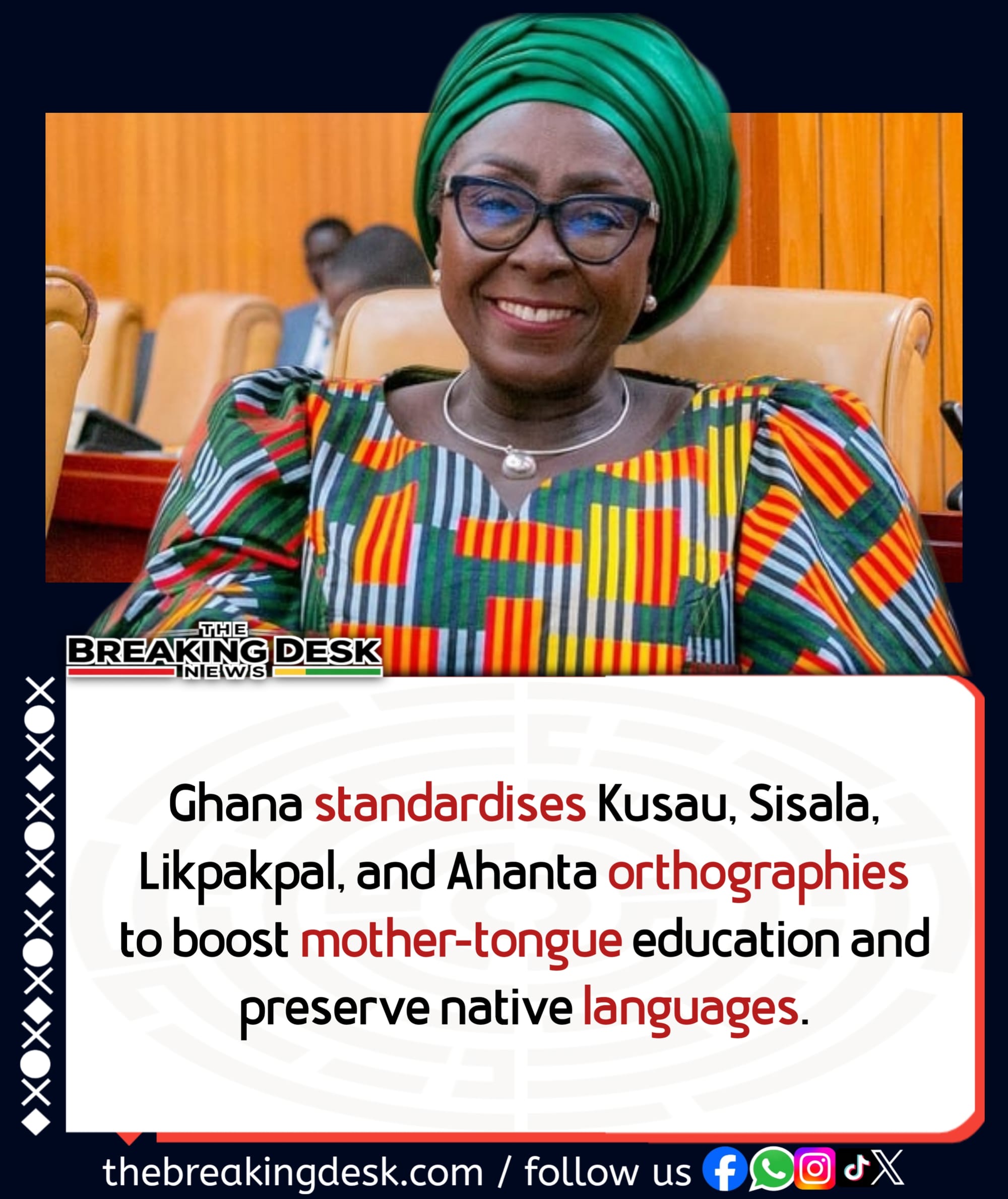
ACCRA — Ghana’s effort to safeguard its native languages and deepen mother-tongue education marked a major milestone on Monday, August 10, 2026, as the government announced that standard orthographies have been finalized for four indigenous languages.
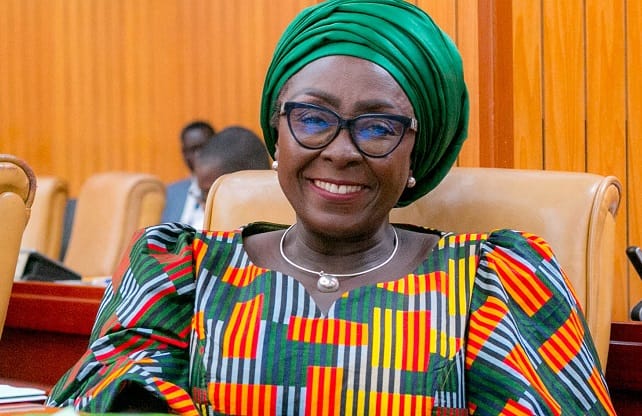
Minister for Tourism, Culture and Creative Arts, Abla Dzifa Gomashie, disclosed the development during the Government Accountability Series in Accra on Monday, August 10, 2026.
According to the Minister, the initiative is being executed through the Bureau of Ghana Languages (BGL) to strengthen the development, promotion, and formal classroom use of mother-tongue languages across the country.
Three Additional Ghanaian Languages Standardised
Ms. Gomashie announced that three additional languages have recently received standardised orthographies, following the initial rollout of the orthography for Ahanta.
The languages include:
- Kusau, spoken by the Kusasi people in the Upper East Region
- Likpakpal (also known as Likpakpaaln), spoken by the Konkomba people
- Sisala, spoken by the Sisala people
(Editor’s Note: While official briefing notes linked Likpakpal to the Dagomba region, Likpakpal is the native language of the Konkomba people. The Dagomba people natively speak Dagbani, an established language in the BGL portfolio.)
A standardised orthography establishes an agreed-upon writing system, including spelling, rules, and grammar, that enables publishers to produce uniform textbooks, storybooks, and literacy resources. The Minister added that the government aims to standardise three more Ghanaian languages before the end of 2026.
Institutional Support and Stakeholder Engagement
This milestone forms part of a broader commitment to improve the capacity of the Bureau of Ghana Languages and fulfill policy promises to resource native language development.
Ms. Gomashie recalled that the BGL hosted the Ghana Languages Dialogue in November 2025, bringing together linguists, educators, and traditional leaders to discuss strategies for preserving local dialects and raising public awareness of their educational value.
She emphasized that standardisation goes beyond mere documentation: it creates a practical framework for integrating local languages into school curricula and safeguarding them for future generations.
Ahanta Orthography Launched
The Ministry, collaborating with the BGL and the Member of Parliament for Ahanta West, Mavis Kuukua Bissue, officially launched the standardised orthography for Ahanta.
The launch provides a structured framework for generating educational content in Ahanta, a critical step for minority languages that historically lacked formal written resources.
Cultural Initiatives for Preservation
To complement academic efforts, the government is leveraging cultural events to encourage language transmission. Notable among these was the Ghana Languages Festival in July 2025, designed to build public pride and engagement in native-language usage.
With Ghana hosting dozens of distinct languages, establishing standardised alphabets remains the foundational step to ensuring equitable access to mother-tongue education nationwide.
Source: Statements by Tourism, Culture and Creative Arts Minister Abla Dzifa Gomashie at the Government Accountability Series on August 10, 2026.
Read:
 FrimPong

Comments ()