

Chairman Wontumi Jailed 20 Years in Akonta Mining Illegal Mining Case
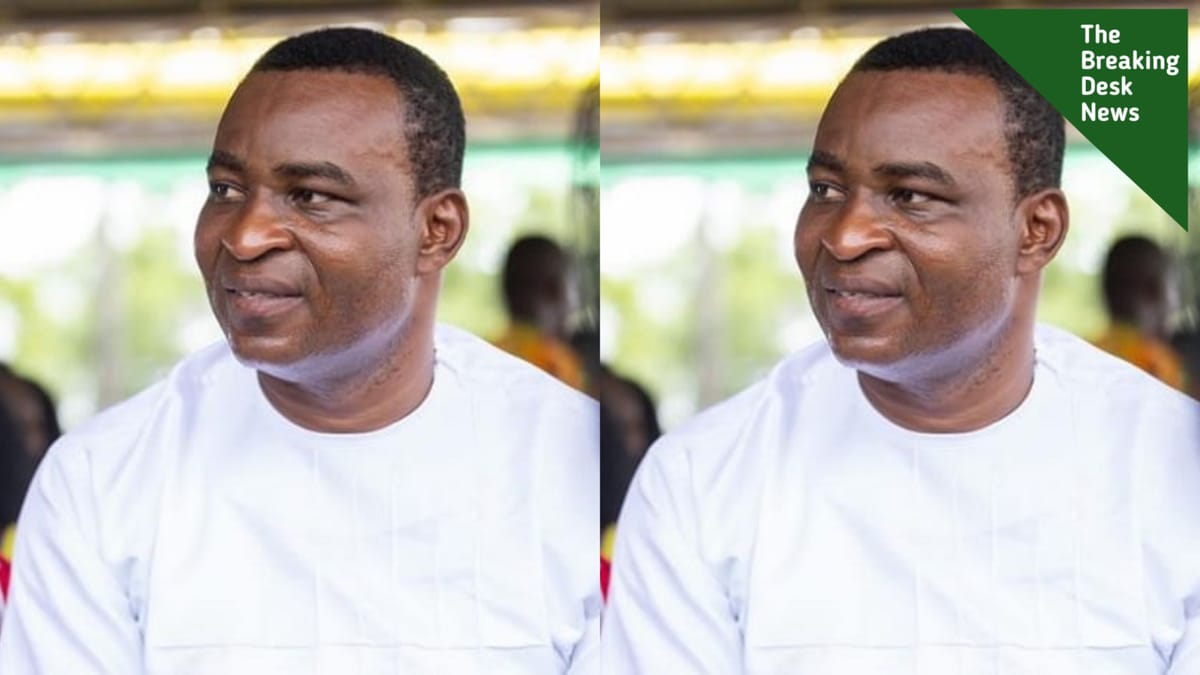
Ashanti Regional Chairman of the New Patriotic Party (NPP), Bernard Antwi Boasiako, widely known as Chairman Wontumi, has been sentenced to 20 years in prison after an Accra High Court found him guilty of offences connected to illegal mining activities involving Akonta Mining Limited.
Justice Audrey Kocuvie-Tay handed down the sentence after concluding that prosecutors had proved the charges beyond reasonable doubt. Although Wontumi received two separate 20-year prison terms, the court ordered that they run concurrently, meaning he will serve a maximum of 20 years.
In addition to the prison sentence, the court imposed a fine of 10,000 penalty units for each of the two offences.
Akonta Mining Limited, the company linked to the case, was also convicted on two counts and fined 15,000 penalty units for each offence.
Court Rejects Attempt to Delay Judgment
Before the judgment was delivered, the defence made a final effort to stop the proceedings by asking the court to refer constitutional questions to the Supreme Court.
The application argued that issues raised during the trial required constitutional interpretation. However, Justice Kocuvie-Tay dismissed the request, ruling that the relevant provisions of the Minerals and Mining Act were straightforward and did not conflict with Ghana's Constitution.
The judge explained that constitutional referrals are only necessary when a genuine legal ambiguity exists, adding that disagreements over how Parliament drafted a law do not automatically raise constitutional questions.
Why the Court Found Wontumi Guilty
The prosecution accused Wontumi and Akonta Mining of unlawfully allowing another individual to operate within the company's mining concession without obtaining approval from the Minister responsible for Lands and Natural Resources.
During the trial, evidence showed that no ministerial approval had been secured before another party was allowed to use the concession. Officials from the Minerals Commission outlined the legal process required for such approvals, and the court noted that this point was never disputed by the defence.
According to the judgment, allowing another person to exercise mining rights without the required authorisation amounted to an unlawful dealing in mineral rights under Ghana's mining laws.
The defence argued that the arrangement with Henry Okum was intended solely to reclaim degraded portions of the concession rather than to carry out mining.
The court, however, reached a different conclusion after examining the evidence presented during the trial.
Justice Kocuvie-Tay relied on testimony indicating that Okum, a small-scale miner, had been permitted to extract minerals from parts of the concession and use the proceeds to finance reclamation work.
The judge found that this evidence supported the prosecution's case and undermined the defence's explanation. An additional claim that future coconut farming would compensate for investments made on the concession was dismissed as unconvincing.
Although companies are generally treated as separate legal entities, the court ruled that the circumstances justified holding Wontumi personally responsible.
Justice Kocuvie-Tay found that Akonta Mining did not operate through an active and independent board of directors and that Wontumi exercised effective control over the company's mining operations.
For that reason, the court lifted the company's corporate veil and held him personally liable for offences committed through the business.
The court also concluded that Wontumi and Akonta Mining intentionally facilitated unlawful mining activities.
Evidence presented during the trial showed that Henry Okum was granted access to the concession without the approvals required under the Minerals and Mining Act. The judgment further cited testimony that Wontumi helped connect Okum with a person who assisted in obtaining an excavator for the mining operations.
Taken together, the court found that the arrangement went beyond land reclamation and amounted to facilitating unauthorised mining.
Convictions and Penalties
The High Court convicted Bernard Antwi Boasiako on two counts:
- Assigning mineral rights without ministerial approval.
- Purposefully facilitating unlawful mining activities.
Akonta Mining Limited was also convicted on corresponding charges involving the unlawful assignment of mineral rights and facilitating illegal mining.
The convictions were secured under the Minerals and Mining Act, 2006 (Act 703), as amended by the Minerals and Mining (Amendment) Act, 2020 (Act 995), which introduced stricter penalties for illegal mining-related offences.
A Significant Ruling in Ghana's Fight Against Illegal Mining
The judgment is expected to become one of the most notable prosecutions linked to Ghana's campaign against illegal mining, commonly known as galamsey.
It also underscores the courts' willingness to impose severe penalties where prosecutors establish that individuals or companies unlawfully transfer mining rights or facilitate unauthorised mining operations.

Comments ()