

Ghana to End SHS Double-Track System with $300M World Bank Project
Ghana’s Ministry of Education secures $300M from the World Bank for the STARR-J project to upgrade infrastructure and end the SHS double-track system by 2027.
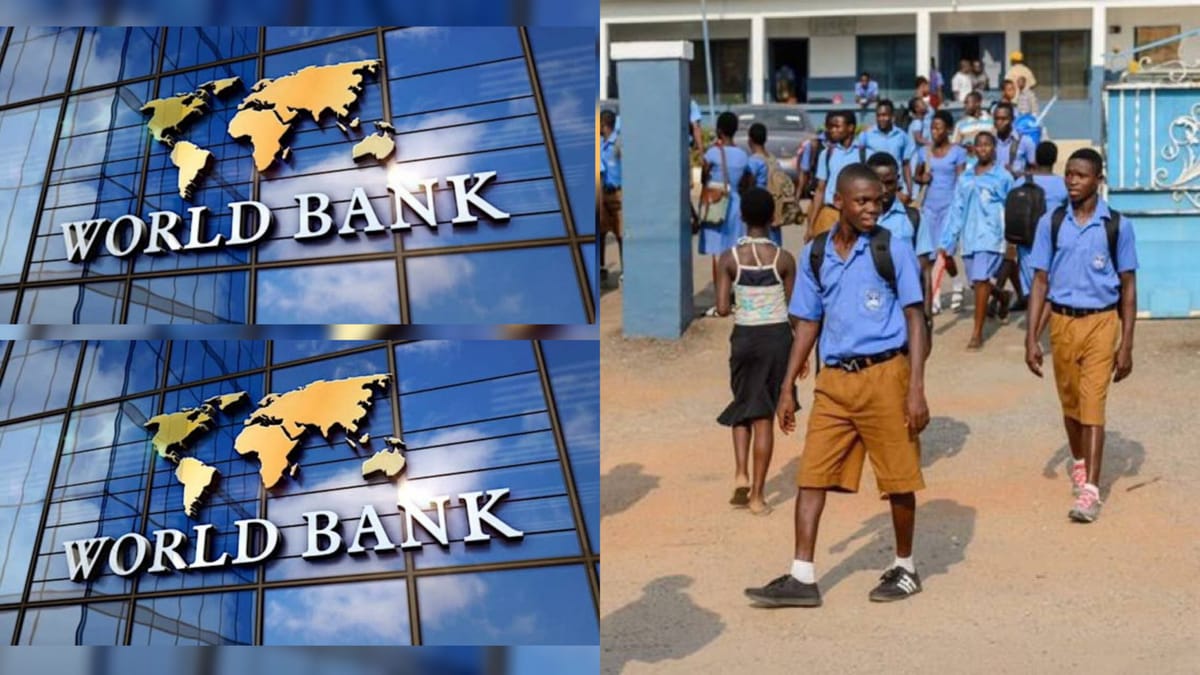
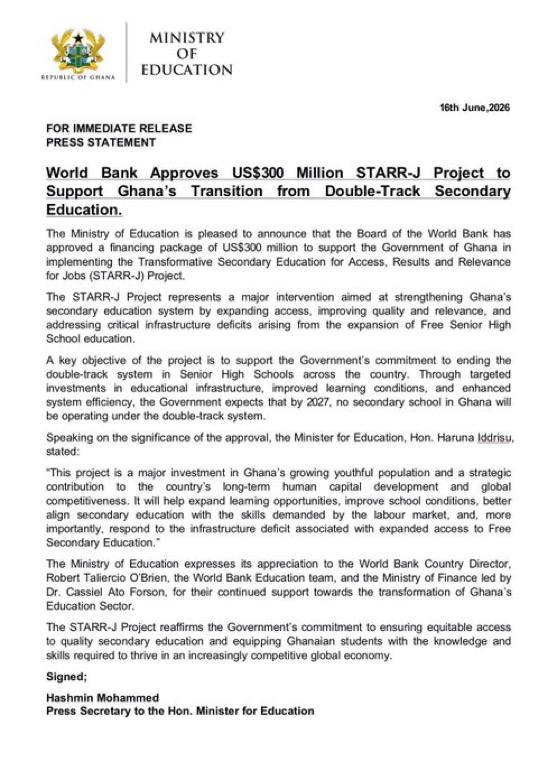
The Ministry of Education has secured a game-changing $300 million financing package from the World Bank to completely overhaul Ghana’s secondary school system. This massive funding injection is specifically targeted at dismantling the controversial "double-track" system in Senior High Schools (SHS) nationwide by 2027.
Introduced in 2018 as a temporary fix to accommodate the explosion of student enrollment under the Free SHS policy, the double-track system split student bodies into alternating groups, creating chaotic academic calendars and stressful learning gaps.
With this new financial backing, the government is launching the Transformative Secondary Education for Access, Results, and Relevance for Jobs (STARR-J) project to permanently fix the infrastructure shortages that forced schools to split their students in the first place.
At its heart, this initiative is less about policy and more about restoring normalcy to the lives of hundreds of thousands of Ghanaian families and educators. Education Minister Haruna Iddrisu emphasized that the STARR-J project is a direct, heavy investment in the country's youth, designed to bridge the severe infrastructure deficit while making sure students aren't just memorizing facts, but learning marketable skills.
A massive chunk of the $300 million will go toward building new classrooms, upgrading science labs, and completing abandoned school blocks. By shifting the focus toward modern STEM and technical vocational training (TVET), the ministry hopes to turn second-cycle institutions into launchpads for the local job market, ensuring that expanded access to education actually translates into real economic opportunities for the younger generation.
This successful funding negotiation represents a massive collaborative victory, with the Ministry of Education extending deep appreciation to key leaders like World Bank Country Director Robert Taliercio O’Brien and Finance Minister Dr. Cassiel Ato Forson.
For parents and teachers who have spent years navigating unpredictable school tracks and overworked semesters, the 2027 phase-out timeline offers a clear light at the end of the tunnel.
If the STARR-J project hits its infrastructure milestones over the next few years, Ghana is on track to deliver a more stable, equitable, and globally competitive education system that allows every single student to learn together under one unified academic calendar.


Comments ()