

360,000 Ghanaians Exit Multidimensional Poverty in 2025 – GSS
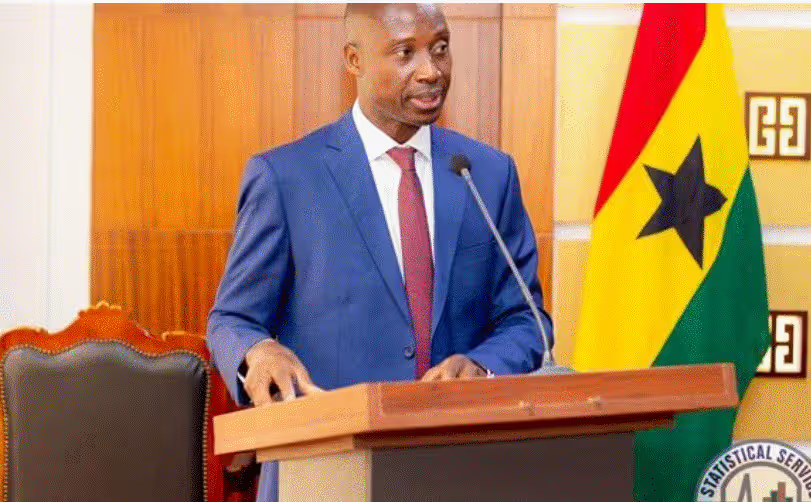
On Wednesday, January 21, 2026, the Government Statistician, Dr. Alhassan Iddrisu, presented a report in Accra. He revealed that Ghana's national multidimensional poverty rate dropped significantly. It fell from 24.9 percent in late 2024 to 21.9 percent by the third quarter of 2025.
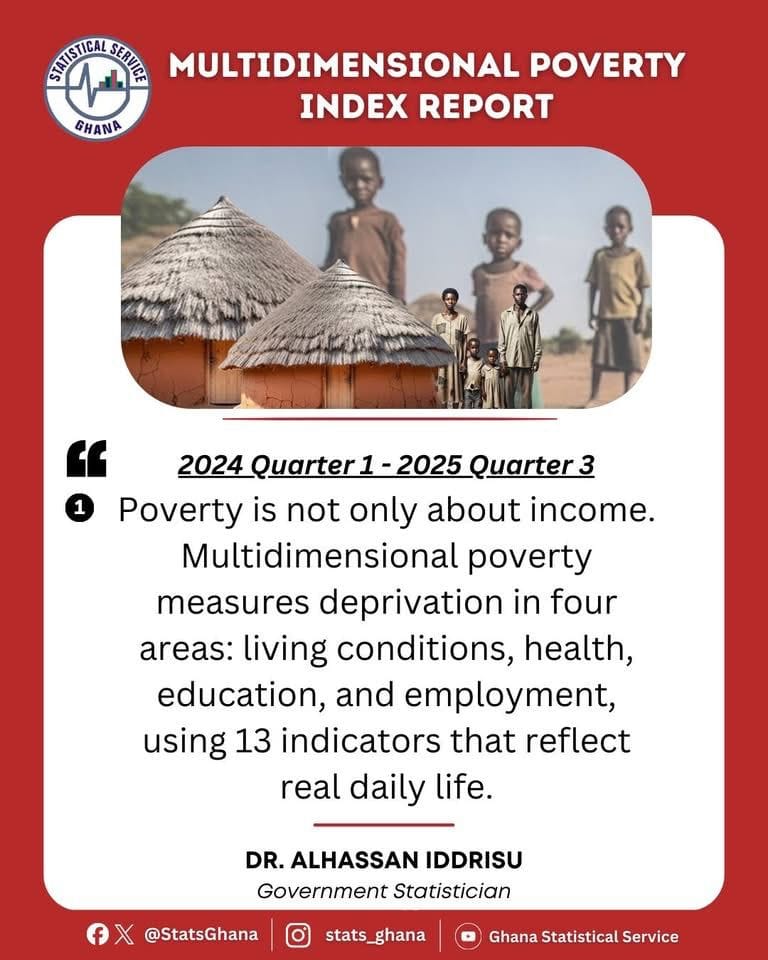
In absolute terms, this represents a reduction from about 8.2 million people to just over seven million individuals classified as multidimensionally poor.
The report described the decline as sustained and encouraging, noting that “over 360,000 people moved out of multidimensional poverty between Q2 and Q3 of 2025 alone,” signalling steady progress in improving living standards across the country.
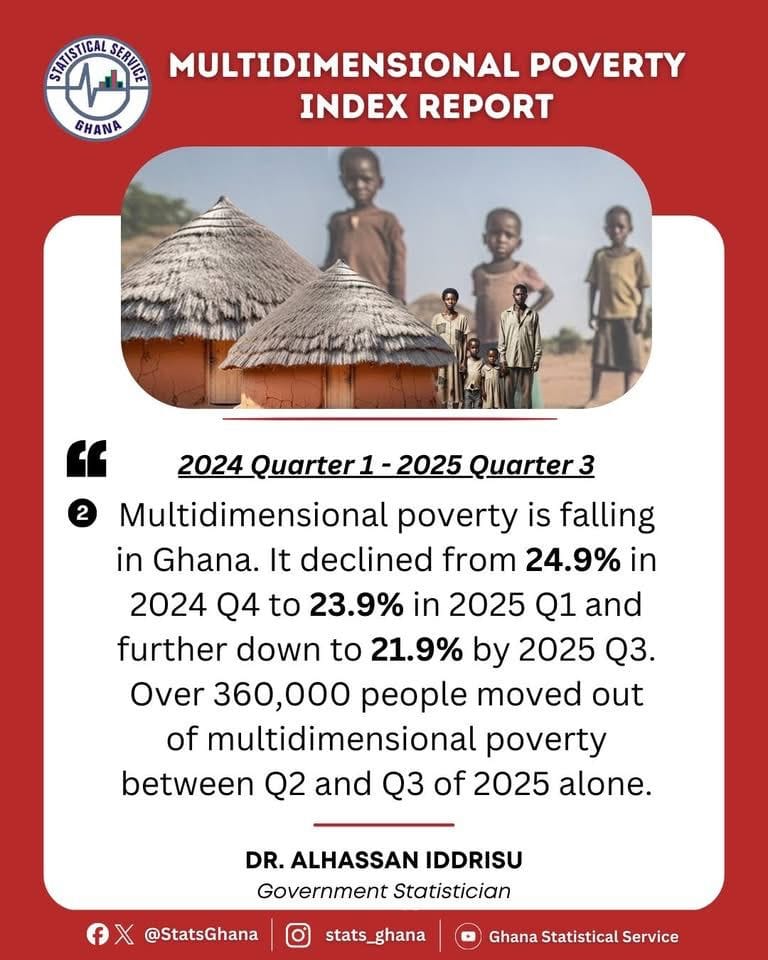
Multidimensional poverty, as defined by the GSS, goes beyond income and measures deprivation across four key areas — living conditions, health, education and employment — using 13 indicators that reflect everyday realities.
Despite the overall improvement, the report highlighted stark disparities between rural and urban areas. Rural poverty incidence stood at 31.9 per cent in the third quarter of 2025, more than double the urban rate of 14.2 per cent, creating a gap of over 17 percentage points.
Regional inequalities were even more pronounced. The North East and Savannah regions recorded poverty levels exceeding 50 per cent in both Q2 and Q3 of 2025, while Greater Accra and the Western Region maintained rates below 20 per cent. In absolute terms, the Ashanti and Northern regions each accounted for more than one million multidimensionally poor residents.
Health and living conditions remain the dominant contributors to poverty, jointly accounting for over 74 per cent of overall deprivation. Lack of health insurance emerged as the single largest factor at 26.5 per cent, followed by nutrition at 14.4 per cent and employment deprivation at 12.3 per cent. The report also flagged emerging pressures, including rising overcrowding and declining school attendance between Q2 and Q3 of 2025.
Education and employment continue to offer strong protection against poverty. Households headed by individuals with no formal education recorded a poverty rate of 38.5 per cent, compared with just 5.7 per cent among those with tertiary education. Similarly, households led by unemployed persons faced a poverty incidence of 35.6 per cent, while those headed by public sector workers recorded only 5.3 per cent.
However, vulnerable groups remain disproportionately affected. Households headed by persons with severe disabilities, particularly those with hearing impairments, and those in informal unions faced significantly higher poverty rates.
According to the report, the number of people experiencing the combined burden of poverty, unemployment and food insecurity rose marginally to 227,500, largely concentrated in urban centres such as Greater Accra, Ashanti and Central regions.
Read:
 Frim Pong



Comments ()