

Okoe-Boye Blasts NDC Over 24-Hour Economy, But Government Says Policy Is Working
Dr Bernard Okoe-Boye has questioned the NDC government's delivery of its 24-hour economy promise, while government officials insist the programme is progressing, citing participating businesses, employment figures and new incentives.
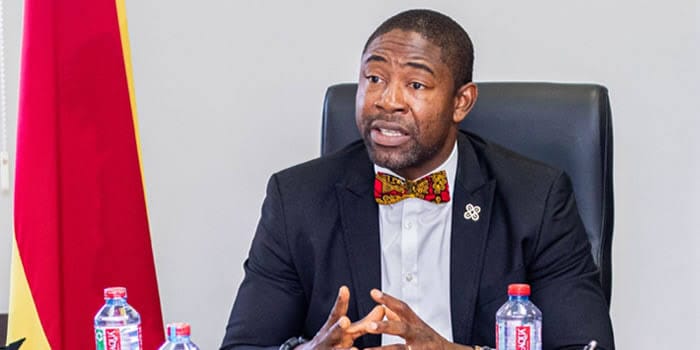
Dr Bernard Okoe-Boye, the New Patriotic Party's (NPP) Greater Accra Regional Organiser, has criticised the government over the implementation of its flagship 24-hour economy programme, arguing that Ghanaians are yet to experience the benefits promised during the 2024 election campaign.
He questioned the government's commitment to the initiative, which was presented as a major part of the NDC's economic transformation agenda. According to him, the policy raised expectations of increased employment, expanded business activities and greater economic opportunities, but its implementation has not delivered the results many Ghanaians anticipated.
"The NDC is so unpromising. They have failed to deliver on the 24-hour economy they promised Ghanaians," he stated.
Okoe-Boye further questioned whether the programme was properly planned before it was presented to voters, suggesting that the promise was used primarily as a campaign message to secure electoral support rather than as a practical economic plan.
What the NDC Promised Under the 24-Hour Economy
The 24-hour economy was one of the NDC's flagship policy proposals ahead of the 2024 general elections. The initiative was designed to encourage businesses and industries to extend their operations beyond conventional working hours, with the broader objective of increasing production and creating employment.
A central feature of the proposal is the 1-3-3 model, under which one operational position is filled by three different workers operating separate eight-hour shifts. This arrangement is intended to allow participating businesses to maintain continuous operations throughout the day and night.
The programme targets several economic sectors, including manufacturing, agro-processing, agriculture, transportation, retail and other productive industries.
Among its key objectives are creating employment opportunities for young people, improving industrial productivity, encouraging businesses to operate multiple shifts and attracting investment into local production.
The government has also outlined financial incentives to encourage private businesses to participate, including tax benefits and concessions on qualifying machinery and equipment.
In February 2026, President John Dramani Mahama assented to the 24-Hour Economy Authority Bill, 2025, establishing a legal framework to coordinate and support the implementation of the initiative.
What the Government Says in Response
Despite the criticism, the government maintains that the 24-hour economy programme is progressing and should not be judged as an initiative expected to produce all its intended results immediately.
Majority Leader James Agalga has defended the implementation process, insisting that the programme is an ongoing economic transformation agenda rather than a one-time event.
"The 24-hour economy is working. But we made it clear that the 24-hour economy is not an event. No, it's a process," he stated.
The government has also presented figures to demonstrate progress in getting businesses and public institutions to adopt extended working hours.
Speaking in Parliament during discussions on the 2027 Budget, Minister for Government Communications Felix Kwakye Ofosu disclosed that 33 manufacturing companies, 12 oil marketing companies controlling 247 fuel stations and 12 state-owned enterprises had registered and commenced operations under the programme.
He further cited employment figures from public institutions that have introduced extended operations. According to him, the Driver and Vehicle Licensing Authority (DVLA) has employed 1,758 people, while the Ghana Ports and Harbours Authority (GPHA) has recruited 1,400 workers since introducing its 24-hour operations.
The Ghana Airports Company Limited has also reportedly employed an additional 334 people under the expanded operational arrangements.
Beyond these developments, President Mahama announced additional incentives on November 16, 2026, to encourage more businesses to participate in the initiative.
The measures include accelerated depreciation of plants and equipment over two years, as well as a one-year deferment of duties and taxes on imported machinery and equipment, with the deferred payments spread over the following two years.
The government says these measures are intended to reduce the initial financial burden on businesses, encourage investment in production equipment and support the expansion of industrial operations.
The Breaking Desk will continue to monitor developments surrounding the 24-hour economy programme and bring readers further reactions and updates.
Read
 FrimPong

Comments ()