

ISWAP Claims Execution of Nigerian Brigadier General; Army Denies Allegation
ISWAP claims it captured and executed a Nigerian Brigadier General during an ambush in Borno State, but the Nigerian Army strongly denies the allegation. Here’s what we know so far.
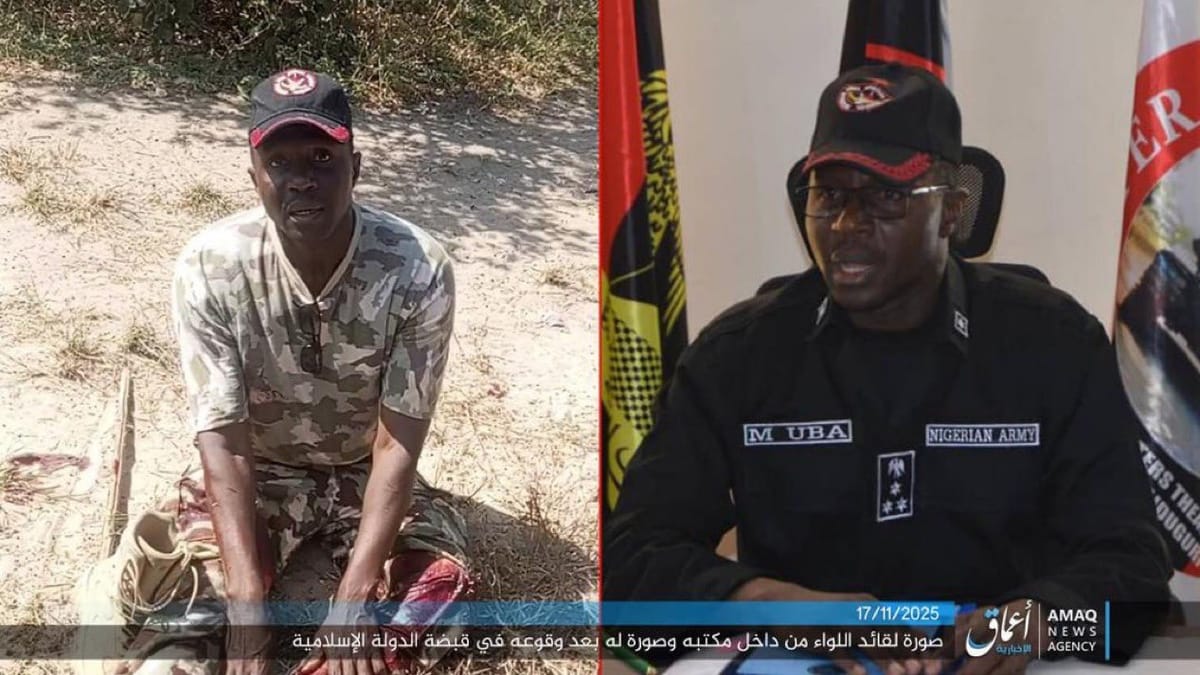
The Nigerian security landscape has once again been thrown into confusion after the Islamic State West Africa Province (ISWAP) claimed it captured and executed a serving Brigadier General during an ambush in Borno State. The Nigerian Army has swiftly dismissed these claims as “fake news,” insisting that the senior officer is alive and accounted for.
The situation has now evolved into a battle of narratives — one driven by an insurgent group known for propaganda, and the other by a military institution concerned about maintaining public confidence and troop morale. As conflicting reports continue to emerge, here is what we currently know.
Background: The Ambush That Sparked the Controversy
The incident reportedly occurred along the Damboa–Wajiroko road, a corridor that has seen repeated insurgent attacks over the past decade. According to early local media reports, ISWAP fighters launched a coordinated ambush on a Nigerian Army patrol involving senior officers and troops from the 25 Task Force Brigade.
ISWAP later claimed the operation was successful, alleging that it captured Brigadier General M. Uba, a high-ranking commander in the region.
ISWAP’s Claim: Capture and Execution
Hours after the attack, ISWAP released a statement through its media outlet, Amaq, claiming it had captured and executed the general. The group circulated a collage of photographs allegedly showing him in uniform, seated, and surrounded by armed fighters.
Some media outlets also published what they described as “last messages” purportedly sent by the general during the incident. These included mentions of his phone battery running low and attempts to guide air support to his position. While dramatic, these messages have not been independently verified, and their origin remains unclear.
ISWAP’s narrative paints the incident as a major victory meant to project strength and intimidate both the Nigerian military and civilian populations. It would also represent one of the most high-profile abductions of a senior officer in Nigeria’s recent counterinsurgency history — if proven true.
However, no independent verification of the execution video or the images has been established. Analysts warn that ISWAP frequently releases staged or manipulated media content designed to shape public perception.
The Nigerian Army’s Response: “Fake News” and Firm Denial
The Nigerian Army has firmly rejected ISWAP’s claims. In multiple statements, the military insisted that the brigadier general was never abducted, adding that he “led his troops through the ambush and returned safely to base.”
According to military spokespersons:
- The ambush did occur.
- Two soldiers and two Civilian Joint Task Force (CJTF) members were killed.
- The general was not captured and did not go missing.
- The ISWAP report is a “fabricated propaganda attempt.”
Local Nigerian media later reported that the general made a video appearance confirming his safety and dismissing the rumours — though this video has not been widely circulated.
From the Army’s perspective, ISWAP’s claim is a psychological warfare tactic aimed at undermining morale and painting the military as vulnerable.
Information War: A Tale of Two Conflicting Narratives
The heavy contradiction between ISWAP’s evidence and the Army’s rebuttal raises significant questions:
1. Is ISWAP’s “proof” credible?
The images released by the group have not been authenticated by any neutral organisation or intelligence body. Terrorist groups often recycle footage, edit images, or stage scenes to exaggerate their achievements.
2. Why is the Army’s response so firm?
The Nigerian military is aware of the morale impact such an incident could cause. A brigadier general’s capture would be unprecedented and embarrassing, making the Army’s swift denial predictable — but not necessarily untrue.
3. Why is verification difficult?
Much of Borno State’s countryside is inaccessible. Journalists and independent observers have limited ability to confirm events in real-time. This creates fertile ground for conflicting narratives.
Until verified evidence emerges, both claims remain in the realm of information warfare.
Implications for Nigeria and the Region
Whether true or false, the incident highlights deeper issues:
1. ISWAP’s Growing Propaganda Machinery
The group continues to refine its media strategy, using high-impact claims to dominate headlines and fuel fear.
2. Vulnerability of Senior Officers
Even rumours of a brigadier general’s capture indicate an evolving threat landscape and possible operational weaknesses.
3. Public Distrust in Official Communication
Conflicting narratives erode public confidence in military statements, making misinformation more potent.
4. Worsening Security Climate in Borno
The ambush underscores the persistent instability in northeastern Nigeria and the insurgents’ ability to carry out sophisticated attacks.
Conclusion: A Developing Story with Unanswered Questions
At the moment, the claims surrounding the alleged execution of Brigadier General M. Uba remain contested. ISWAP insists it captured and killed the senior officer, while the Nigerian Army categorically denies any such incident occurred.
With no independent verification of ISWAP’s evidence — and no publicly available proof from the Army beyond official statements — the truth remains uncertain.
As more information emerges, The Breaking Desk News will continue monitoring developments and providing verified updates rather than relying on unconfirmed claims.
Comments ()